────── ⋆⋅☆⋅⋆ ──────────── ⋆⋅☆⋅⋆ ──────────── ⋆⋅☆⋅⋆ ──────
˙ .୨ৎ𝐏𝐡𝐢𝐥𝐢𝐩𝐩𝐢𝐧𝐞 𝐇𝐢𝐬𝐭𝐨𝐫𝐢𝐜𝐚𝐥 𝐅𝐢𝐠𝐮𝐫𝐞𝐬 𝐁𝐢𝐨𝐠𝐫𝐚𝐩𝐡𝐲୨ৎ
────── ⋆⋅☆⋅⋆ ──────────── ⋆⋅☆ada☆⋅⋆ ──────────── ⋆⋅☆⋅⋆ ──────
| 𝗜𝗺𝗮𝗴𝗲 ( ˶ •⩊• ˵ ) | Name ᓚ₍ ^. .^₎ | 𝗕𝗮𝗰𝗸𝗴𝗿𝗼𝘂𝗻𝗱 /ᐠ - ˕ -マ | Family 𝐈𝐧𝐟𝐨 ≽^-⩊-^≼ |
|---|---|---|---|
| 𝑱𝒐𝒔é 𝑷𝒓𝒐𝒕𝒂𝒄𝒊𝒐 𝑹𝒊𝒛𝒂𝒍 𝑴𝒆𝒓𝒄𝒂𝒅𝒐 𝒚 𝑨𝒍𝒐𝒏𝒔𝒐 𝑹𝒆𝒂𝒍𝒐𝒏𝒅𝒂 | José Rizal was a Filipino patriot, physician, and man of letters who inspired the Philippine nationalist movement. He was educated in Manila and Madrid, and committed to reforming Spanish rule in the Philippines. Rizal's first novel, Noli me tangere, exposed the evils of Spanish rule in the Philippines. He also published El filibusterismo, a sequel to his first novel, and contributed to the Propaganda Movement. Rizal's political program included integration of the Philippines as a province of Spain, representation in the Cortes, and equality of Filipinos and Spaniards before the law. He was executed by a firing squad in Manila, but his martyrdom convinced Filipinos of the necessity for independence from Spain.୨୧ | Was born on June 19, 1861, to Francisco Rizal Mercado and Teodora Alonso Realonda y Quintos in the town of Calamba in Laguna province. He had nine sisters and one brother. His parents were leaseholders of a hacienda and an accompanying rice farm held by the Dominicans. ‧°꒰🐾꒱༘⋆ | |
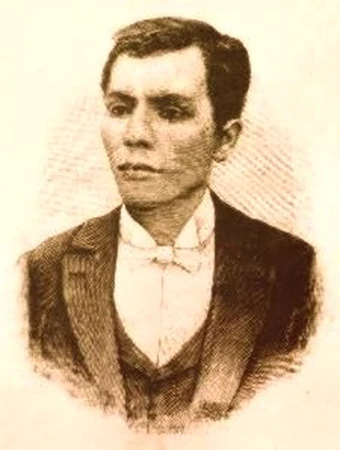
| 𝑨𝒏𝒅𝒓é𝒔 𝑩𝒐𝒏𝒊𝒇𝒂𝒄𝒊𝒐 𝒚 𝒅𝒆 𝑪𝒂𝒔𝒕𝒓𝒐 | Andres Bonifacio was a Philippine patriot and founder of the Katipunan society, which instigated the August 1896 revolt against the Spanish. Born into poor parents, Bonifacio advocated for complete independence from Spain and founded the Katipunan in 1892. The organization grew to 100,000 members and branches in Manila, central Luzon, and the islands. Bonifacio led the insurrection on Luzon but was defeated by Spanish troops. In 1897, a convention named Aguinaldo as president of a new Philippine republic, and Bonifacio tried to establish his own rebel government.୨୧ | His parents, Santiago and Catalina, were a couple who belonged to the working class, although at one time his father worked as mayor of Tondo. Andres was the eldest son of the Bonifacio couple. He had three brothers and two sisters.୨୧ |
| 𝑱𝒖𝒂𝒏 𝑳𝒖𝒏𝒂 𝒅𝒆 𝑺𝒂𝒏 𝑷𝒆𝒅𝒓𝒐 𝒚 𝑵𝒐𝒗𝒊𝒄𝒊𝒐 𝑨𝒏𝒄𝒉𝒆𝒕𝒂 | Juan Luna was a Filipino artist born in Badoc, Philippines. He attended Ateneo Municipal de Manila and later studied at the Academy of Fine Arts in Manila. Influenced by artists Lorenzo Guerrero and Agustin Saez, Luna moved to Spain and studied at the Escuela de Bellas Artes de San Fernando. He met painter Don Alejo Vera and was exposed to Renaissance art in Rome. Luna's paintings, including La Muerte de Cleopatra and Spolarium, gained him critical acclaim. He moved to Paris and returned to Madrid in 1887, gaining acclaim for his paintings. Luna married Maria de la Paz Pardo de Tavera and traveled to Venice and Rome before settling in Paris.୨୧ | was born on October 23 1857, in Badoc, to Doña Laureana Novicio y Ancheta . Juan had one brother: Antonio Luna . Juan married Maria De La Paz Pardo De Tavera on December 8 1886, at age 29. They had 2 children: Andrés Luna and Bibi Luna .୨୧ | |
| 𝐌𝐚𝐫í𝐚 𝐉𝐨𝐬𝐞𝐟𝐚 𝐆𝐚𝐛𝐫𝐢𝐞𝐥𝐚 𝐂𝐚𝐫𝐢ñ𝐨 | María Josefa Gabriela Cariño de Silang was a Filipino military leader known for her role in the Ilocano independence movement against Spanish colonial rule. She married Diego Silang in 1757 and, during the Seven Years' War, began a rebellion against Spanish officials in Ilocos. Gabriela served as Diego's advisor and aide-de-camp during confrontations with Spanish forces. After Diego's assassination, Gabriela sought refuge in Tayum, Abra, where she appointed her first generals and became known as "La Generala." She was captured by the Spanish and executed in a public hanging in Vigan's central plaza.୨୧ | was born in barrio Caniogan, Santa, Ilocos to a Spanish Ilocano father named Anselmo Cariño, a trader who ferried his wares from Vigan to Abra along the Abra River and a descendant of Ignacio Cariño, the first Galician from Spain to arrive in Candon in the late 17th century.୨୧ | |
| 𝐑𝐞𝐦𝐞𝐝𝐢𝐨𝐬 𝐆𝐮𝐢𝐧𝐭𝐨 𝐆𝐨𝐦𝐞𝐳 | Remedios Gomez-Paraiso, also known as Kumander Liwayway, was a beauty queen and military commander during World War 2. After her father's death, she joined the Huk Rebellion and became a leader. She started as a nurse but eventually became a squadron commander, primarily responsible for supplying food and supplies. Despite facing overwhelming opposition, Liwayway remained steadfast and turned the tide of the battle. She also looked fabulous, dressing up before battle to inspire her troops and to maintain her self-confidence. Despite her beauty, Liwayway believed she had to balance her personal freedom with her military duties.୨୧ | When Maria Remedios Nable Jose was born on 6 March 1881, in Lingayen, Pangasinan, Philippines, her father, Mariano Vinluan Nable Jose, was 25 and her mother, Maria de la Paz Uson Borja, was 22.୨୧ |